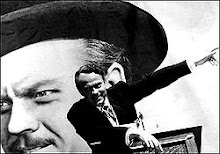
The Pawnbroker (1965, Sidney Lumet) *****
“I’m not particularly concerned with the future."
Director, Sidney Lumet, the consummate live television director of the 1950’s ("The Alcoa Hour", "You Are There", "Kraft Theatre", etc.) enjoyed an incredible feature film debut (12 Angry Men, 1957) and was coming into his creative stride with Long Day's Journey Into Night (1962). Then he made the first really break through movie of the 1960’s, The Pawnbroker. Simply put it made everything that came after it in American Cinema possible. Lumet continued his streak and made three minor classic Fail-Safe (1964), The Hill (1965) and The Deadly Affair (1966) following The Pawnbroker. He didn’t reach these creative heights again until Dog Day Afternoon (1975). And hasn’t since.
With The Pawnbroker Lumet made his best film and exposed American audiences to techniques from the French new wave (with the fast inter-cutting of scenes, both backward and forward in time), and the first nudity (albeit from the waist-up) in a film rated by the MPAA. American audiences had not seen anything like it. As a movie it tapped into our changing society with all of its warts and blemishes and dangerous elements.
Most American movies of the day reinforced the idea of how people saw themselves or escapist fare. The big money makers of the year were Mary Poppins, Goldfinger and Those Magnificent Men In Their Flying Machines. But with The Pawnbroker the viewer experienced their darkest fears and failings, a new and uncomfortable experience.
I first became aware of The Pawnbroker from my mother. She had seen it during a movie night out with the girls at the Fox Redlands. She came away enthralled, amazed, shocked and frankly impressed with what she had seen on the screen. And she could not stop talking about it. It wasn’t until seeing it at the Fox Venice while a student at UCLA that I finally saw the movie.
Despite the many accolades The Pawnbroker received - the New York Film Critics award for Best Film and Director, the Golden Globe for Best Actor, the Silver Bear (Best Actor at the Berlin International Film Festival), among others - it only garnered one Oscar® nomination - for Best Actor. And much to Steiger's surprise he didn’t win. I heard him say in an interview that runs as a short on TCM from time to time, how he shifted in his seat at the ceremony an nearly ran up to the stage before he realized he hadn’t won. For the record the winner was Lee Marvin for Cat Ballou.
Rod Steiger, one of the greatest to come out the school of “method acting”, got his stripes in live television dramas with his major theatrical break playing opposite Marlon Brando in On the Waterfront (1954), earning an Oscar nomination for the trouble. He followed it with the neo-noir The Big Knife (1955) and then played Al Capone . He even made a musical Oklahoma and he was part of Darryl F. Zanuck’s star studded (albeit second tier player) The Longest Day (1962). But in the main Rod Steiger had been sidelined for over a decade in Hollywood.
The Pawnbroker was the role that reignited his career (back to the level coming out of his Oscar® nomination for Best Supporting Actor in On the Waterfront, 1954). Despite its unsuccessful Oscar nomination The Pawnbroker earned him international critical acclaim and launched his career as an A-list actor in major films (Doctor Zhivago and The Loved One). And the following year he did win the Academy Award for Best Actor in 1967’s Best Picture, In the Heat of the Night.
Rod Steiger was barely forty when he played Sol Nazerman. But he immersed himself so deeply in the character that it's hard to believe he's not a sixty-year-old man. Sol is a holocaust survivor living on Long Island with his sister’s family. She is interested in advancing her husband’s civil service career as a teacher by making a family trip to Europe where they could see the old cities and reconnect with the charm and ways of the old-world. She has a nostalgia for the “the old country” of her youth saying, “You can almost smell the difference …” trailing off before Sol makes his nonchalant response, “It’s something of a stink, if I remember.”
His “business partner” in the pawnshop is the kingpin of the local underworld played Brock Peters; who two years before had played the wrongly convicted black man in To Kill A Mockingbird. (In an interesting coincidence, toward the end of the movie we see Sol running along Park Avenue past a movie theater with the marquee displaying The L-Shaped Room, staring Leslie Caron and Brock Peters.)
Sol’s time is primarily occupied with his remembrance of the 25th anniversary of seeing his family degraded and slaughtered by the Nazi’s in a concentration camp. If it didn’t sound so cruel one might almost call it nostalgia after getting to know Sol better and his tendency toward masochism. Now Sol is completely detached from the rest of the world; he has cut himself off from human emotion and feels only shame and the guilt of a wrongful survivor, as he sleepwalks through life.
Steiger summed up his character like this, "I explained that this solitary Jew could not rise to heights of emotion; he had been hammered by life and by people. The faith he had to find was in other people, because God had betrayed him." (From Rod Steiger: Memoirs of a Friendship by Tom Hutchinson).
Upon meeting a community organizer (of the day) Sol tries to rebuff her by saying, “Sell your sorrow someplace else Mrs. Burchfield.”
While Sol is confined into spending a lunch with the social worker he announces with conviction, “You have made the afternoon very tedious with your constant search for an answer. And one more thing: please, stay out of my life.” This is Sol’s mantra.
Spanish Harlem of the day was both exotic and scary as hell to someone from Redlands California. The New York City we were accustomed to seeing in the movies was the stuff of Doris Day in That Touch of Mink or Audrey Hepburn’s world in Breakfast At Tiffany’s.
At one point in the pawnshop he apprises a young woman’s engagement ring as being glass to her complete disappointment, this is inter-cut with a flashback of the concentration camp where the prisoners are made to raise their hands to allow the soldiers access to their rings and jewelry.
The scenes in the concentration camps production values are too high. The choice at first seems like rubbing one’s nose in the Nazi horror, but on reflection it might have been made to show-off the improved film making from a production values POV in the mid-1960. It would have been more powerful had Lumet used a documentary technique for those portions of his film.
The only human connection Sol seems to have is his assistant in the pawnshop, Jesus Ortiz, whom he tries to “teach the business.” But even this pedagogic impulse is ephemeral and he often loses patience with his pupil.
Early on Jesus asks, “Say, how come you people come to business so naturally?”
Sol answers, “You people? Oh, let's see. Yeah. I see. I see, you... you want to learn the secret of our success, is that right? All right I'll teach you. First of all you start off with a period of several thousand years, during which you have nothing to sustain you but a great bearded legend. Oh my friend you have no land to call your own, to grow food on or to hunt. You have nothing. You're never in one place long enough to have a geography or an army or a land myth. All you have is a little brain. A little brain and a great bearded legend to sustain you and convince you that you are special, even in poverty. But this little brain, that's the real key you see. With this little brain you go out and you buy a piece of cloth and you cut that cloth in two and you go and sell it for a penny more than you paid for it. Then you run right out and buy another piece of cloth, cut it into three pieces and sell it for three pennies profit. But, my friend, during that time you must never succumb to buying an extra piece of bread for the table or a toy for a child, no. You must immediately run out and get yourself a still larger piece cloth and so you repeat this process over and over and suddenly you discover something. You have no longer any desire, any temptation to dig into the Earth to grow food or to gaze at a limitless land and call it your own, no, no. You just go on and on and on repeating this process over the centuries over and over and suddenly you make a grand discovery. You have a mercantile heritage! You are a merchant. You are known as a usurer, a man with secret resources, a witch, a pawnbroker, a sheenie, and a kike!”
The Pawnbroker is an amazing movie. It broke new ground in its day and is just as fresh and engaging today. The performances that seem effortless and feel uncomfortably real, are at times it’s hard to watch, but you can’t look away.
Friday, July 23, 2010
Sunday, July 11, 2010
Comfort Food & Guilty Pleasures: Mickey Rooney plays the drums and the ponies
Light weight “B-Movie” noir with Mickey Rooney as a veteran who comes to LA to strike it big in the local music scene as a drummer. Through a confluence of events he meets up with a mobster (James Craig) and goes to work running a betting parlor until he meets a dancer and is talked into replacing the drummer in the band at Fluffy’s on the Sunset Strip. The joint is owned by William Demarest who plays “Fluff” the avuncular impresario; he even composes a song and sings it with Mickey (nominated for an AA) “A Kiss To Build A Dream On”. The house band is a “dream team” with Louis Armstrong and his band along with Jack Teagarden (as themselves). We also get to hear Louis do it (presumably for the first time). Mickey Rooney actually plays the drums in the movie, but he fails to impress as a tough guy. Nice location shots of the Sunset Strip and Hollywood nightspots of the day. This was definitely made as the bottom half of a double bill as poor Mickey was on the shady side of his career in 1951 after having been one of MGM’s biggest moneymakers a decade earlier. Sally Forrest shares top billing, playing the dancer who was the object of Mickey’s affection. Sally’s career never really took off, even though she did some interesting work with Ida Lupino in Never Fear (1949) also playing a dancer in a much better film noir. For me the highlight of the movie is when given the choice of betting parlors to manage Rooney picks the Playa del Rey location (“Give me the beach, I like the fog”).
Saturday, June 19, 2010
The American Myth: Eisenhower’s America, when our lives had three acts.
The Lusty Men (1952, Nicholas Ray) ****
“There never was a bronco that couldn't be rode, there was never a cowboy that couldn't be throwed. Guys like me last forever.”
So says Robert Mitchum as “retired” rodeo rider Jeff McCloud (due to an injured leg and heart condition), in this early Nicholas Ray picture about men trying to prove their masculinity by riding in rodeos. Arthur Kennedy (who made a remarkably good cowboy) plays a man fascinated by the rodeo and hopes to use it as a shortcut to earn the money to buy a ranch with his wife played by Susan Hayward in the type of role that made her the model of strong female characters in the 1950’s. An American dream rodeo-style.
I first became aware of this movie reading The Devil Thumbs A Ride by Barry Gilford, a wonderful book about movies that in its description provides a “… perfect companion for the tour of the mood, ominous, violent underbelly of American movie making.” Who could ask for anything more? Gifford’s interest in The Lusty Men comes from his appreciation of Nicholas Ray and the films he made. This alone made it a must see for me and I finally caught up with it on TCM a short while ago.
Before he made Rebel Without A Cause (1955) and after he made In A Lonely Place (with Bogart, 1950) and under contract to RKO, Nick Ray made this remarkable present day western about rodeo cowboys. Top billed was RKO studio player Robert Mitchum as Jeff McCloud. Mitchum was coming into his stardom after the success of the noir-ish Macao previously (not to mention a number of successful loan-outs to other studios).
Hollywood legend has it that Mitchum got director Josef von Sternberg fired off Macao as the two men constantly clashed and Nicholas Ray was brought in to finish the picture. Perhaps that’s how Ray got attached to The Lusty Men.
In The Lusty Men Mitchum gives one of his finest and most nuanced performances. He is absolutely effortless as he alternates charisma with menace as the trainer and mentor with that of enabler and rival. But this is the stuff of Nick Ray’s cinema, variegated characters constantly changing and surprising the audience.
Dennis Hopper said of Ray, “… (he) painted on a smokescreen canvass the lonely, restless and haunted outsiders of life. Nick Ray followed the beautiful losers against the society that dismissed them.” Apparently in the same way that Hollywood ultimately dismissed him.
But Mitchum as the enabler is the catalyst and not the driving force of the story for the film’s exposition where a man bent on pursuing his narcissistic fantasy of rodeo fame and riches. And it’s that man, in the form of Arthur Kennedy who steals the show.
David Thompson wrote of Arthur Kennedy, “is one of the subtlest American supporting actors, never more so than when revealing the malice or weakness in an ostensibly friendly man.” Kennedy already won two (of five) Oscar nominations (Champion 1949 and Bright Victory 1951) before taking the role of Wes Merritt.
I’ll never forget reading that toward the end of his life he was located living on a houseboat in Arkansas when he was needed to record some dialog for the restoration of Lawrence of Arabia.
Arthur Kennedy was a marvelous actor, who excelled in westerns. Of particular note are the Anthony Mann westerns Bend of the River and The Man from Laramie and Fritz Lang’s Rancho Notorious.
As Wes Merritt, Kennedy effortlessly morphs from a regular cowhand with a dream of owning his own place to a maniacal man in a race to fame and riches and the fast life of a rodeo star. Had the film been allowed to have a “true” ending, Kennedy may have made off with another Oscar nod for his transformational performance.
It’s clear why Susan Hayward was such a big box office draw in the 1950’s. She brilliantly plays Wes Merritt’s dutiful wife, but not in ‘50’s stereotype. Hayward plays Louise Merritt as a woman of character, able to navigate through any situation with grace and determination. She is a woman who knows what she wants and how to keep it and what she wants is her man.
A full quartet of stars receive name of above the title status. Arthur Hunnicutt completes the group playing a freakishly fascinating rodeo clown Booker Davis – eerily like a ghost of things to come for anyone who hangs on long enough in rodeo riding.
As a bonus we get Jimmie Dodd in one of this most developed film roles – you’ll remember Jimmie from “The Mickey Mouse Club” with his famous line closing each show, “Why? Because we like you!” And he favors us with a tune or two.
Unfortunately The Lusty Men was a studio film, albeit from RKO (a studio owned by Howard Hughes, an ardent champion of Eisenhower’s America). In a reach for old time movie sentimentality what Nick Ray had so carefully weaved into a tale of constantly changing character’s desires.
I can’t believe that a film with Nick Ray in control would ever have had such a pat and sentimental ending after having crafted such an intricate and nuanced tale of loyalty and desire. But even with an ending that rings false, the movie is a minor masterpiece of character development and storytelling, brilliantly photographed.
Ray wrote his own epitaph and assessment when talking about his films to an adoring critic, “You like these films, but you can't imagine how often they represent only fifty percent of what I wanted to do. You have no idea how I had to fight to achieve even that fifty percent.” Ray felt he made no really good movies.
The Lusty Men is nowhere near ‘half bad’; it’s truly a minor masterpiece like many of Ray’s films. I haven't come across one yet that wasn’t worth watching.
“There never was a bronco that couldn't be rode, there was never a cowboy that couldn't be throwed. Guys like me last forever.”
So says Robert Mitchum as “retired” rodeo rider Jeff McCloud (due to an injured leg and heart condition), in this early Nicholas Ray picture about men trying to prove their masculinity by riding in rodeos. Arthur Kennedy (who made a remarkably good cowboy) plays a man fascinated by the rodeo and hopes to use it as a shortcut to earn the money to buy a ranch with his wife played by Susan Hayward in the type of role that made her the model of strong female characters in the 1950’s. An American dream rodeo-style.
I first became aware of this movie reading The Devil Thumbs A Ride by Barry Gilford, a wonderful book about movies that in its description provides a “… perfect companion for the tour of the mood, ominous, violent underbelly of American movie making.” Who could ask for anything more? Gifford’s interest in The Lusty Men comes from his appreciation of Nicholas Ray and the films he made. This alone made it a must see for me and I finally caught up with it on TCM a short while ago.
Before he made Rebel Without A Cause (1955) and after he made In A Lonely Place (with Bogart, 1950) and under contract to RKO, Nick Ray made this remarkable present day western about rodeo cowboys. Top billed was RKO studio player Robert Mitchum as Jeff McCloud. Mitchum was coming into his stardom after the success of the noir-ish Macao previously (not to mention a number of successful loan-outs to other studios).
Hollywood legend has it that Mitchum got director Josef von Sternberg fired off Macao as the two men constantly clashed and Nicholas Ray was brought in to finish the picture. Perhaps that’s how Ray got attached to The Lusty Men.
In The Lusty Men Mitchum gives one of his finest and most nuanced performances. He is absolutely effortless as he alternates charisma with menace as the trainer and mentor with that of enabler and rival. But this is the stuff of Nick Ray’s cinema, variegated characters constantly changing and surprising the audience.
Dennis Hopper said of Ray, “… (he) painted on a smokescreen canvass the lonely, restless and haunted outsiders of life. Nick Ray followed the beautiful losers against the society that dismissed them.” Apparently in the same way that Hollywood ultimately dismissed him.
But Mitchum as the enabler is the catalyst and not the driving force of the story for the film’s exposition where a man bent on pursuing his narcissistic fantasy of rodeo fame and riches. And it’s that man, in the form of Arthur Kennedy who steals the show.
David Thompson wrote of Arthur Kennedy, “is one of the subtlest American supporting actors, never more so than when revealing the malice or weakness in an ostensibly friendly man.” Kennedy already won two (of five) Oscar nominations (Champion 1949 and Bright Victory 1951) before taking the role of Wes Merritt.
I’ll never forget reading that toward the end of his life he was located living on a houseboat in Arkansas when he was needed to record some dialog for the restoration of Lawrence of Arabia.
Arthur Kennedy was a marvelous actor, who excelled in westerns. Of particular note are the Anthony Mann westerns Bend of the River and The Man from Laramie and Fritz Lang’s Rancho Notorious.
As Wes Merritt, Kennedy effortlessly morphs from a regular cowhand with a dream of owning his own place to a maniacal man in a race to fame and riches and the fast life of a rodeo star. Had the film been allowed to have a “true” ending, Kennedy may have made off with another Oscar nod for his transformational performance.
It’s clear why Susan Hayward was such a big box office draw in the 1950’s. She brilliantly plays Wes Merritt’s dutiful wife, but not in ‘50’s stereotype. Hayward plays Louise Merritt as a woman of character, able to navigate through any situation with grace and determination. She is a woman who knows what she wants and how to keep it and what she wants is her man.A full quartet of stars receive name of above the title status. Arthur Hunnicutt completes the group playing a freakishly fascinating rodeo clown Booker Davis – eerily like a ghost of things to come for anyone who hangs on long enough in rodeo riding.
As a bonus we get Jimmie Dodd in one of this most developed film roles – you’ll remember Jimmie from “The Mickey Mouse Club” with his famous line closing each show, “Why? Because we like you!” And he favors us with a tune or two.
Unfortunately The Lusty Men was a studio film, albeit from RKO (a studio owned by Howard Hughes, an ardent champion of Eisenhower’s America). In a reach for old time movie sentimentality what Nick Ray had so carefully weaved into a tale of constantly changing character’s desires.
I can’t believe that a film with Nick Ray in control would ever have had such a pat and sentimental ending after having crafted such an intricate and nuanced tale of loyalty and desire. But even with an ending that rings false, the movie is a minor masterpiece of character development and storytelling, brilliantly photographed.
Ray wrote his own epitaph and assessment when talking about his films to an adoring critic, “You like these films, but you can't imagine how often they represent only fifty percent of what I wanted to do. You have no idea how I had to fight to achieve even that fifty percent.” Ray felt he made no really good movies.
The Lusty Men is nowhere near ‘half bad’; it’s truly a minor masterpiece like many of Ray’s films. I haven't come across one yet that wasn’t worth watching.
Wednesday, May 12, 2010
Curiosities/Time Capsules -- 1960’s Sex Pre-Psychedelic Style
Sex and the Single Girl (1964, Richard Quine) **
“They want me to turn that dirty rag into the most influential news magazine in the whole world.”
The bestseller and iconoclastic book, by Helen Gurley Brown, screen rights were purchased by Warner Brothers for the unheard of sum of $200,000; not for the content -- but for the title alone. The review in Time magazine described it this way, “Since the book is plotless, a collection of jiffy food recipes pressed between pages of instant indiscretion, the film makers fabricated this silly little comedy starring Natalie Wood and other celebrities old enough to know better.”
On so many ways we want this middling mid-sixties comedy to succeed. But alas despite the A-list cast, it fails as comedy on so many levels. But in a weird way the movie makes up for its shortcoming as a time capsule (& curiosity).
In retrospect the movie; Sex and the Single Girl was at the nexus of many of the major players in mythical community of Hollywood and American popular culture in its day.
In the mid-1960’s, before the “summer of love”, America was still trying to shake-off the boring lifestyle and conformity of the Eisenhower post war years. Movies like this played into the imaginary notion of “sexual liberation” (a term not yet invented).
Sex and the Single Girl as a movie came wrapped in the most seductive package of all – it was recommended for Adults Only and it opened on Christmas Day. “Adults Only” was the consummate label of the era intended to create interest and excite the imagination of the “adult” film going public and guarantee box-office; odd for a Christmas movie – talk about counter-programming.
Adult moviegoers were promised they were going to see something, “dirty”. Because “sex” was dirty in 1964.
“Sex comedies” were nothing new; either as a genre or as films directed by Richard Quine (who made a bundle making them). The notion of using double- entendre to “say more than you’re saying” had been popular in movies since silents (no pun intended) and in the theater since, well how long do you want to go back? Let’s face it, sex sells and it always will.
Other bright spots in Quine’s sex comedy career extend to How To Murder Your Wife (from the same year) and The Notorious Landlady two years earlier (1962). Additionally he also acquitted himself very well with the “woman’s weeper” in 1960 with Strangers When We Meet and the stylish production of the Broadway hit Bell Book and Candle (1958). It made Manhattan look so inviting, almost like a “Disneyland for adults”.
A key ingredient of the genre, and for all practical purposes a character in its own right, is “booze”. The primary component for the loosening of inhibitions and likely to make the female of the species susceptible to seduction and of course sex, often adulterous and always outside of marriage.
“How about a drink?”
“I don’t drink.”
“That’s ridiculous!”
Booze was a big part of things.
“Is there any more of this?”
“Are you kidding?”
In Sex and the Single Girl we have two generations of super-star couples; Wood & Curtis and Fonda & Bacall. Natalie Wood plays Helen Gurley Brown. But in this incarnation it’s Dr. Brown, a psychologist specializing in marital issues (short hand in those days for “sexual relations”).
Curtis edits a salacious magazine about sex and gossip – always dressed to the nines in solid dark suits and fashionable “sports” clothes. This was the early 1960’s, people still dressed up.
Sex and the Single Girl demonstrates the top of Curtis’ star power – he is able to claim top-billing in the movie version of the #1 Best Seller of the decade and have his character fashioned into the lead (vs. Wood’s character who plays the book’s author).
Lauren Bacall and Henry Fonda are too old for rock and roll but too young for America’s songbook – this generation of stars had to pretend to be infinitely contemporary and not be thought of as “classic film stars”.
Henry Fonda (his third film in ’64 along with Fail Safe and The Best Man) plays a married man who owns a hosiery company (who is obviously fascinated with women’s legs) and lives in constant fear of (Lauren Becall) his wife’s routine eruptions of jealous rage.
What now might be construed as a fantasy sequence is played straight, as a musical number with Count Basie and his Orchestra in a nightclub. This was a time in movies when musical popular culture straddled the great divide between top 40 music and adult contemporary. It had to “swing” but not be traditional big band or popular rock – music that everyone thought was “listenable”. Unfortunately in nearly every outing this philosophy of movie music ran a ground and appealed to nobody.
Lauren Bacall, a creation of Howard Hawks (in the manner of Slim Keith) and the widow of Humphrey Bogart, made a handful of undistinguished films in the intervening years after his death. The only arguable exception is Douglas Sirk’s Written on the Wind (1956). Bacall made only one more film before going back to New York and reinvented herself on Broadway. In Harper she played a wronged wife and femme fatal, against the inquiring PI played by Paul Newman. (Watch out, this is one of my favorite movies so it will no doubt wind-up in a future post.) Remember, Betty is not back on the screen until 1976 when she appears in Don Siegel’s western, The Shootist.For the record: Slim Keith was her own recreation – with embellishments from Howard Hawks and Leland Hayward and much later Truman Capote, said in her memoirs, more on this in a later post). "God blessed me with a happy spirit and many other gifts. What I was not blessed with I went out and got. Sometimes the price was too high, but I've never been much of a bargain hunter." from Slim: Memories of a Rich and Imperfect Life (1991).
Fonda and Curtis made two movies together, this one and in 196x The Boston Strangler – the last good movie Curtis made.
Jack Lemmon and his work in Some Like It Hot (with Tony Curtis) is lampooned throughout the movie. It was five years after Wilder’s film and it was still considered topical. “He’s young and handsome and charming, he looks like Jack Lemmon.” Curtis’ character is called Mr. Lemmon once while wearing a woman’s nightgown.
“Go to Vegas kid you can make a bundle!”
Curtis and Wood had made Kings Go Forth (with Frank Sinatra) in the late 50’s, and went on to make The Great Race (with Jack Lemmon) before both of their careers disintegrated when the 1960’s commenced in full force with Easy Rider. And the “super-star system” became undone.
An incredible cast of supporting players include (our favorite best pal from all the Fred & Ginger pairing in the 1930’s) Edward Everett Horton, Mel Ferrer (at the time married to Audrey Hepburn), Stubby Kaye after Li'l Abner (1959) and before Cat Ballou (1965) and the indomitable Otto Knuger.
Knuger in his last role plays the head of the psychology practice where Wood works. He made his film debut in 1923, but it was in the 1930s that Kruger's polished, urbane characterizations came into full swing. Although he occasionally played a hero, as in Corregidor (1943), he was often cast as the amoral villain (in Hitchcock’s 1947 Saboteur) or a charming but corrupt businessman (usually a banker), a task at which he excelled. Kruger was one of the industry's busiest character actors until a series of strokes brought about his retirement in the mid-1960s.
Another fascinating artifact about this movie is that its screenwriter was Joseph Heller screenwriter – it was ’64 when his 1961 novel Catch-22 was optioned by a studio, his other screenwriting credit is Dirty Dingus McGee easily the worst movie Frank Sinatra made after we first saw him act in From Here To Eternity.
Our movie ends in a manic car chase (foreshadowing things to come in movies and in real life Los Angeles). Los Angeles’ freeways are just as barren and unattractive today as they are in second-unit footage for this film. It’s important to note that nowhere in the film is its locale identified; either by name or iconography until the madcap freeway chase. Hollywood’s idea of the 1960’s was as over-the-top in concept as it was in execution.
The finale at the new Los Angeles International Airport (LAX), with its icon the Theme Building in full view portends a look at America’s future. Next stop the “swinging sixties” and most definitely in La La Land.
Monday, April 19, 2010
The American Myth/John Ford’s Forgotten Movie and acceptable stereotypes.
Tobacco Road (1941, John Ford) **
An often-overlooked John Ford film, Tobacco Road is based on a wildly successful novel by Erskine Caldwell, who published over 25 novels and sold over 80 million books in his lifetime. Tobacco Road’s success extended to Broadway (eight plus years and 3,182 performances) where it was still running when the 20th Century Fox film was released. The play was revived in 1942, 1943 and 1950. The original Broadway production is the sixteenth longest running show ever. The play was ban in England until 1949.
The controversy and success of the book and play, created a bidding war among the studios for the motion picture rights – even though the Hay’s Office had practically declared the play and its content “unsuitable for motion pictures.” RKO was Darryl F. Zanuck’s chief rival for the rights and was promising the role of Jeeter to Charles Laughton. Henry Fonda was even mentioned for the role as was the more age appropriate Walter Brennan.
Zanuck’s rushed the movie version to capitalize on the title’s momentum especially hard because as always, Fox was in need of a hit. And John Ford was one of the most reliable directors in the business, having just won an Oscar for The Grapes of Wrath the previous year for the studio. This made him the logical project for the high profile project.
Again Ford worked Nunnally Johnson as screenwriter, but this time (at Zanuck’s direction) they concocted the film as the broadest of Ford’s comedies, retaining none of the original story’s earthiness, social realism or relevance. Erskine Caldwell disavowed himself of having anything to do with the movie.
After it’s release Time Magazine complained that the stage version was a “case study in degeneracy”, and was turned by Hollywood into “a slow, sentimental account of Jeeter's aged life and times.” The review went on to say, “In giving the disheveled story a moral scrubbing, a bath of pathos and a sort of happy ending. Hollywood has rubbed off its sharp edges of character and depraved psychology.” The always, outstanding blog, Shooting Down Pictures provides an excellent review of the film’s critical reception.
It is interesting to note that in the popular biography “Pappy: The Life of John Ford” written by Ford’s grandson Tobacco Road is never mentioned. It’s also conspicuously absent from Mel Gussow’s biography of Darryl Zanuck “Don’t Say Yes Until I Finish Talking.”
Film maker Lindsay Anderson captured Tobacco Road on film, perhaps better than anyone, when he wrote: “The whole of Tobacco Road, which for the extraordinary balance and control of its continual variations of mood – wistfully elegiac and wildly slapstick, cruelly satirical and tenderly sentimental – constitutes perhaps the most sheerly virtuoso performance of Ford’s career.”
Tobacco Road is set in a proverbial Georgia backwater at the height of the Great Depression where abject poverty is the order of the day. As for progress nothing much has happened since the end of the Civil War.
It’s important to know that Ford cast Charley Grapewin as Jeeter Lester to reprise his role in the Broadway production. Otherwise it might seem that Grapewin was channeling his earlier role as Grandpa in Ford’s The Grapes of Wrath. Jeeter is a shiftless conniver and patriarch who must secure the money to pay the mortgage on the old homestead or be packed off with Ma to the “poor farm”.
Best (and most relevant today) quote, “I don’t own it, you don’ own it. Now the bank owns it and they didn’t have anything to do with building it”.
The Lester family resembles every “hillbilly” stereotype imaginable. The Lester’s are rural poor, white and uneducated. They have been maligned and ridiculed in various forms for the better part of the 20th century – “The Beverly Hillbillies”, Li’l Abner, Ma and Pa Kettle and Deliverance. This may well be Ford foreshadowing Tennessee William’s Baby Doll (directed on the screen by Elia Kazan).
Ford takes full advantage of the hillbilly motif and plays it for laughs with a heavy helping of sexual innuendo. That comes in the form of Gene Tierney (years before Laura and Leave Her To Heaven). Here she plays Ellie May, Jeeter’s daughter; who by all suggestion (in the words of my mother) is a sexpot.
When this movie was made, lampooning people like these folks was “fair game”. Today they would be described as “rural down scale white working class voters” – the same as the target of Lyndon Johnson’s failed “War on Poverty” in the early 1960’s.
In a broad episode, Jeeter’s son Dude (William Tracy) marries a “somewhat touched” Sister Bessie (Marjorie Rambeau), who breaks out into full-blown gospel hymn (“Bringing in the Sheep”, “Onward Christian Soldiers”) at the drop of a hat. Bessie may be touched but she is full throttle forward for Jeeter’s son, even buying him car as part of her dowry for marrying the boy of 20. She admits to being 39. Dude pretty much wreaks the car on their way back home. But no matter, the horn still works.
Are these the people who Obama was talking about with his “cling to their guns or religion” remark during the campaign?
John Ford however has affection for these characters and has Arthur Miller photograph them with the same luscious care and beautiful cinematography as he did for How Green Was My Valley and Young Mr. Lincoln.
I first saw this late one Saturday night on The Fabulous 52 with my dad. I couldn’t have been more than 12 or 13. My dad remembered the movie from his youth. We laughed our heads off. Maybe that’s what Ford wanted us to do – otherwise it would be too sad.
The film closes with Jeeter falling asleep on his porch after bragging about his plans for tomorrow. “I can just tell by the way it smells this is going to be a great year for cotton.” One gets the strong sense that tomorrow never comes for Jeeter and Ma.
An often-overlooked John Ford film, Tobacco Road is based on a wildly successful novel by Erskine Caldwell, who published over 25 novels and sold over 80 million books in his lifetime. Tobacco Road’s success extended to Broadway (eight plus years and 3,182 performances) where it was still running when the 20th Century Fox film was released. The play was revived in 1942, 1943 and 1950. The original Broadway production is the sixteenth longest running show ever. The play was ban in England until 1949.
The controversy and success of the book and play, created a bidding war among the studios for the motion picture rights – even though the Hay’s Office had practically declared the play and its content “unsuitable for motion pictures.” RKO was Darryl F. Zanuck’s chief rival for the rights and was promising the role of Jeeter to Charles Laughton. Henry Fonda was even mentioned for the role as was the more age appropriate Walter Brennan.
Zanuck’s rushed the movie version to capitalize on the title’s momentum especially hard because as always, Fox was in need of a hit. And John Ford was one of the most reliable directors in the business, having just won an Oscar for The Grapes of Wrath the previous year for the studio. This made him the logical project for the high profile project.
Again Ford worked Nunnally Johnson as screenwriter, but this time (at Zanuck’s direction) they concocted the film as the broadest of Ford’s comedies, retaining none of the original story’s earthiness, social realism or relevance. Erskine Caldwell disavowed himself of having anything to do with the movie.
After it’s release Time Magazine complained that the stage version was a “case study in degeneracy”, and was turned by Hollywood into “a slow, sentimental account of Jeeter's aged life and times.” The review went on to say, “In giving the disheveled story a moral scrubbing, a bath of pathos and a sort of happy ending. Hollywood has rubbed off its sharp edges of character and depraved psychology.” The always, outstanding blog, Shooting Down Pictures provides an excellent review of the film’s critical reception.
It is interesting to note that in the popular biography “Pappy: The Life of John Ford” written by Ford’s grandson Tobacco Road is never mentioned. It’s also conspicuously absent from Mel Gussow’s biography of Darryl Zanuck “Don’t Say Yes Until I Finish Talking.”
Film maker Lindsay Anderson captured Tobacco Road on film, perhaps better than anyone, when he wrote: “The whole of Tobacco Road, which for the extraordinary balance and control of its continual variations of mood – wistfully elegiac and wildly slapstick, cruelly satirical and tenderly sentimental – constitutes perhaps the most sheerly virtuoso performance of Ford’s career.”
Tobacco Road is set in a proverbial Georgia backwater at the height of the Great Depression where abject poverty is the order of the day. As for progress nothing much has happened since the end of the Civil War.
It’s important to know that Ford cast Charley Grapewin as Jeeter Lester to reprise his role in the Broadway production. Otherwise it might seem that Grapewin was channeling his earlier role as Grandpa in Ford’s The Grapes of Wrath. Jeeter is a shiftless conniver and patriarch who must secure the money to pay the mortgage on the old homestead or be packed off with Ma to the “poor farm”.
Best (and most relevant today) quote, “I don’t own it, you don’ own it. Now the bank owns it and they didn’t have anything to do with building it”.
The Lester family resembles every “hillbilly” stereotype imaginable. The Lester’s are rural poor, white and uneducated. They have been maligned and ridiculed in various forms for the better part of the 20th century – “The Beverly Hillbillies”, Li’l Abner, Ma and Pa Kettle and Deliverance. This may well be Ford foreshadowing Tennessee William’s Baby Doll (directed on the screen by Elia Kazan).
Ford takes full advantage of the hillbilly motif and plays it for laughs with a heavy helping of sexual innuendo. That comes in the form of Gene Tierney (years before Laura and Leave Her To Heaven). Here she plays Ellie May, Jeeter’s daughter; who by all suggestion (in the words of my mother) is a sexpot.
When this movie was made, lampooning people like these folks was “fair game”. Today they would be described as “rural down scale white working class voters” – the same as the target of Lyndon Johnson’s failed “War on Poverty” in the early 1960’s.
In a broad episode, Jeeter’s son Dude (William Tracy) marries a “somewhat touched” Sister Bessie (Marjorie Rambeau), who breaks out into full-blown gospel hymn (“Bringing in the Sheep”, “Onward Christian Soldiers”) at the drop of a hat. Bessie may be touched but she is full throttle forward for Jeeter’s son, even buying him car as part of her dowry for marrying the boy of 20. She admits to being 39. Dude pretty much wreaks the car on their way back home. But no matter, the horn still works.
Are these the people who Obama was talking about with his “cling to their guns or religion” remark during the campaign?
John Ford however has affection for these characters and has Arthur Miller photograph them with the same luscious care and beautiful cinematography as he did for How Green Was My Valley and Young Mr. Lincoln.
I first saw this late one Saturday night on The Fabulous 52 with my dad. I couldn’t have been more than 12 or 13. My dad remembered the movie from his youth. We laughed our heads off. Maybe that’s what Ford wanted us to do – otherwise it would be too sad.
The film closes with Jeeter falling asleep on his porch after bragging about his plans for tomorrow. “I can just tell by the way it smells this is going to be a great year for cotton.” One gets the strong sense that tomorrow never comes for Jeeter and Ma.
Monday, April 5, 2010
Curiosities & Time Capsules -- This Crooner Is For Hire
Suddenly (1954, Lewis Allen) *****
“Tonight at five o'clock I kill the President. One-second after five there's a new President. What changes? Nothing!”
Often described as a film noir, I think of Suddenly as a tight B-movie capturing Frank Sinatra on the upswing of his show business comeback - a foreshadowing of things to come for both Frank and the rest of us.
Smack in-between the two seminal events of Sinatra’s comeback from the show business junkyard; the Oscar for From Here To Eternity and releasing the single Young At Heart (cut with his new arranger Nelson Riddle), Suddenly was released in October of 1954 by United Artists.
I first saw this as a public domain VHS tape on sale at a video store for a buck or two. Sinatra movies have always held special interest for me, as my mother was a fan; but Suddenly slipped through my television experience.
The best “B-movies” have their own cosmology. Each one exists in a cosmos where the most improbable of coincidences make perfect sense and the inevitable climatic twist (or surprise) is foreshadowed at the beginning. Suddenly has such a marker in its first few minutes and delivers quite a wallop at the end. Moreover like the perfect “B-picture” it satisfies and makes one want to come back for more.
The action takes place, in real time, in a small California town called Suddenly –
First Driver: [stops car to ask for directions] Officer, can you tell me the way to Three Rivers?
Slim Adams: About two miles to the first main intersection, then turn left. It's about sixty miles.
First Driver: Thanks. What town is this?
Slim Adams: Suddenly.
First Driver: Suddenly what?
Slim Adams: No no. That's the name.
First Driver: [laughs] That's a funny name for a town.
Slim Adams: Uh huh. Hangover from the old days. That's the way things used to happen here: suddenly.
First Driver: I see.
Slim Adams: Road agent, gamblers, gunfighters.
First Driver: Well, I take it things have changed.
Slim Adams: Uh huh. Things happen so slow now, the town council is figuring to change the name to Gradually.
First Driver: [laughs] Thanks, officer. [begins to drive away]
Slim Adams: Pleasure. Come back.
Suddenly is the quintessential 1950s small American town. Where everyone knows everyone and all play by the rules. It has a main street where everyone shops and a grocery store just up the block from the toy store where you can buy a six-bit toy gun.
Microscopic in its detail of character Suddenly opens showing us just how the small town operates along the main drag over looked by a small house on the hill that will be stage for the main action of the film.
Despite wearing the familiar fedora this is not the affable Frank of the MGM years. After playing streetwise character of Pvt. Angelo Maggio, Suddenly provides the training wheels for future anti-hero film roles. Frank plays John Baron a sociopath turned psychotic during WW2. Barton is forever boasting about the Silver Star he won for being a “successful killer of Gerrys. “I did a lot of chopping in the last war…” he brags (it’s interesting he doesn’t acknowledge Korea). In peacetime he has turned gun for hire with the President of United States as his current target. Whether he works for the mob (or better the National Crime Syndicate identified in the recent Kefauver Hearings) or as a specter, hired by a foreign government (located behind the Iron Curtain). We are never told.
Sinatra is amazing is his ability to unwind his character - in real time - from credible G-man conning his way into the lives of innocents to a full-on psychotic monster. Frank goes full throttle in his ease to violence and comfort in his sadistic cruelty. His smile when kicking the sheriff in his recently broken arm is uncomfortably reminiscent of Richard Widmark pushing the old lady in a wheel chair down the stairs in Kiss of Death.
Sterling Haden shares above the title billing, playing against his hard-boiled film noir type as the sheriff who is willing to sacrifice all for the life of this commander-in-chief. A red blooded American through and through.
Hayden’s career seemed to be back on track having ditched the notion that he was a communist sympathizer (after his real life WWII heroics in Yugoslavia – and metal from Tito). He made five films in 1954; most notably Johnny Guitar (d. Nichols Ray). It can only be described as a gender-bender of a western, with Hayden playing second banana to Joan Crawford; it’s impossible to tell who was more macho.
Standing six-feet five-inches tall Hayden towers over Sinatra when side-by-side but in close-ups and full frame shots Sinatra dominates until the inevitable climax.
Just as important as its strong thematic connection to The Manchurian Candidate, Suddenly demonstrates Sinatra’s desire to risk making movies with controversial subject matter. His next Oscar nomination was in 1955 for The Man With the Golden Arm and he very much wanted to make a movie about the execution of Private Slovik (the only American executed for desertion during the second world war) written by blacklisted screenwriter Albert Maltz in 1960. Wikipedia advises that as Sinatra was campaigning for John F. Kennedy for President, the Kennedy camp was naturally concerned, and ultimately persuaded Sinatra to cancel the project. Which is ironic in that it was JFK’s encouragement that persuaded Sinatra to make The Manchurian Candidate in 1962.
Since first watching it I have always been drawn to Suddenly. I’m not sure why. It may be how perfectly in time it follows the Kefauver hearings into organized crime and Sinatra’s real life relationships with key mobsters. Or it maybe because it anticipates the importance of the mob in electing JFK (with Frank as conduit). And there is the matter of the mob being involved in President's assassination. But mostly it's the urban legend that Oswald watched Suddenly on local television before that fateful day in Dallas. Isn’t that why the movie was withdrawn like The Manchurian Candidate isn’t it? That did happen didn’t it?
As a side show it’s interesting to note that Hayden actually won a Silver Star in the war and Sinatra never severed in the military.
“Tonight at five o'clock I kill the President. One-second after five there's a new President. What changes? Nothing!”
Often described as a film noir, I think of Suddenly as a tight B-movie capturing Frank Sinatra on the upswing of his show business comeback - a foreshadowing of things to come for both Frank and the rest of us.Smack in-between the two seminal events of Sinatra’s comeback from the show business junkyard; the Oscar for From Here To Eternity and releasing the single Young At Heart (cut with his new arranger Nelson Riddle), Suddenly was released in October of 1954 by United Artists.
I first saw this as a public domain VHS tape on sale at a video store for a buck or two. Sinatra movies have always held special interest for me, as my mother was a fan; but Suddenly slipped through my television experience.
The best “B-movies” have their own cosmology. Each one exists in a cosmos where the most improbable of coincidences make perfect sense and the inevitable climatic twist (or surprise) is foreshadowed at the beginning. Suddenly has such a marker in its first few minutes and delivers quite a wallop at the end. Moreover like the perfect “B-picture” it satisfies and makes one want to come back for more.
The action takes place, in real time, in a small California town called Suddenly –
First Driver: [stops car to ask for directions] Officer, can you tell me the way to Three Rivers?
Slim Adams: About two miles to the first main intersection, then turn left. It's about sixty miles.
First Driver: Thanks. What town is this?
Slim Adams: Suddenly.
First Driver: Suddenly what?
Slim Adams: No no. That's the name.
First Driver: [laughs] That's a funny name for a town.
Slim Adams: Uh huh. Hangover from the old days. That's the way things used to happen here: suddenly.
First Driver: I see.
Slim Adams: Road agent, gamblers, gunfighters.
First Driver: Well, I take it things have changed.
Slim Adams: Uh huh. Things happen so slow now, the town council is figuring to change the name to Gradually.
First Driver: [laughs] Thanks, officer. [begins to drive away]
Slim Adams: Pleasure. Come back.
Suddenly is the quintessential 1950s small American town. Where everyone knows everyone and all play by the rules. It has a main street where everyone shops and a grocery store just up the block from the toy store where you can buy a six-bit toy gun.
Microscopic in its detail of character Suddenly opens showing us just how the small town operates along the main drag over looked by a small house on the hill that will be stage for the main action of the film.
Despite wearing the familiar fedora this is not the affable Frank of the MGM years. After playing streetwise character of Pvt. Angelo Maggio, Suddenly provides the training wheels for future anti-hero film roles. Frank plays John Baron a sociopath turned psychotic during WW2. Barton is forever boasting about the Silver Star he won for being a “successful killer of Gerrys. “I did a lot of chopping in the last war…” he brags (it’s interesting he doesn’t acknowledge Korea). In peacetime he has turned gun for hire with the President of United States as his current target. Whether he works for the mob (or better the National Crime Syndicate identified in the recent Kefauver Hearings) or as a specter, hired by a foreign government (located behind the Iron Curtain). We are never told.
Sinatra is amazing is his ability to unwind his character - in real time - from credible G-man conning his way into the lives of innocents to a full-on psychotic monster. Frank goes full throttle in his ease to violence and comfort in his sadistic cruelty. His smile when kicking the sheriff in his recently broken arm is uncomfortably reminiscent of Richard Widmark pushing the old lady in a wheel chair down the stairs in Kiss of Death.
Sterling Haden shares above the title billing, playing against his hard-boiled film noir type as the sheriff who is willing to sacrifice all for the life of this commander-in-chief. A red blooded American through and through.
Hayden’s career seemed to be back on track having ditched the notion that he was a communist sympathizer (after his real life WWII heroics in Yugoslavia – and metal from Tito). He made five films in 1954; most notably Johnny Guitar (d. Nichols Ray). It can only be described as a gender-bender of a western, with Hayden playing second banana to Joan Crawford; it’s impossible to tell who was more macho.
Standing six-feet five-inches tall Hayden towers over Sinatra when side-by-side but in close-ups and full frame shots Sinatra dominates until the inevitable climax.
Just as important as its strong thematic connection to The Manchurian Candidate, Suddenly demonstrates Sinatra’s desire to risk making movies with controversial subject matter. His next Oscar nomination was in 1955 for The Man With the Golden Arm and he very much wanted to make a movie about the execution of Private Slovik (the only American executed for desertion during the second world war) written by blacklisted screenwriter Albert Maltz in 1960. Wikipedia advises that as Sinatra was campaigning for John F. Kennedy for President, the Kennedy camp was naturally concerned, and ultimately persuaded Sinatra to cancel the project. Which is ironic in that it was JFK’s encouragement that persuaded Sinatra to make The Manchurian Candidate in 1962.
Since first watching it I have always been drawn to Suddenly. I’m not sure why. It may be how perfectly in time it follows the Kefauver hearings into organized crime and Sinatra’s real life relationships with key mobsters. Or it maybe because it anticipates the importance of the mob in electing JFK (with Frank as conduit). And there is the matter of the mob being involved in President's assassination. But mostly it's the urban legend that Oswald watched Suddenly on local television before that fateful day in Dallas. Isn’t that why the movie was withdrawn like The Manchurian Candidate isn’t it? That did happen didn’t it?
As a side show it’s interesting to note that Hayden actually won a Silver Star in the war and Sinatra never severed in the military.
Wednesday, March 24, 2010
Time Capsules, Curiosities and Neo-Noir – Ann-Margret before carnal knowledge.
Kitten With A Whip (1964, Douglas Heyes) ***
“ Maybe it’s a mistake to feel sorry for kids like that … maybe it’s a mistake not to…”
Capitalizing on the upward trajectory of Ann-Margret’s career and the heat from being paired with Elvis in Warner’s Viva Las Vegas that spring, Universal released Kitten With A Whip in November of 1964. Giving A-M top billing for the first time, albeit surrounded by a crop of television stars. A-M stretches her acting chops to play juvenile femme fatal Jody Dvorak; whose personality vacillates between pathetic waif victim of society to sexual temptress and extortionist blackmailer. We don’t see this Ann-Margret again until Carnal Knowledge in 1971.
Kitten With A Whip opens with the same panic of a girl running away from something, we don’t know what, shades of Kiss Me Deadly. This time it’s Jody Dvorak running away from a reform school where she has stabbed a matron and escaped. She winds up at the house of Dave Stratton played by John Forsythe, fresh from wrapping production on 157 episodes of Bachelor Father. In the main Forsythe plays the part as if he was still playing Uncle Bentley – Eisenhower Republican, sensitive to social issues (especially the plight of misunderstood juveniles), early 1960’s suburbanite (with traditional values; who uses a straight razor in 1964 anyway?) – who is estranged from his wife and contemplating running for the United States Senate.
Strattan lives in a mid-century California Ranch-style house with early American décor. His home is replete with the classic stereo-as-furniture, playing music left over from Harry Mancini’s soundtrack from Touch of Evil. Good Samaritan Dave believes a little hospitality and empathy and understanding talk can mollify any situation.
That is until Judy’s posse shows-up. A trio of well-clad delinquent’s led by Peter Brown (long a stalwart of television westerns of the day) as Ron the sadomasochist member well connected and educated member of the trio. Skip Ward stars as the volatile bad-guy and Diane Sayer as the drugged out girl in tow (she even wears a beauty mark). Diane Sayer, who once played the only bad date Wally Cleaver ever had. And for added measure we have Richard Anderson (who replaced Ray Collins as the copy playing Lt. Steve Drum in Perry Mason) as Dave’s best friend.
Be it an early 1960’s expression of film noir or an exploitation film (with the necessarily quotient of violence) Kitten With A Whip delivers as a first class B-Movie movie punch. Poorly reviewed in its day, Kitten With A Whip plays well as a guilty pleasure and look at the sociology of the 1960’s before psychedelia. After all the film is based on an original Fawcett paperback from 1959, we couldn’t expect any less.
Subscribe to:
Posts (Atom)